Until I read Tim Tollefson’s recent blog post on flotrack.org, “CrossFit vs Ultrarunning. Which is more nauseating?,” I’d never encountered any published anti-ultrarunning epistles. But, alas, I do feel obligated to respond to Tollefson’s unfair and unprovoked attack on my beloved sport and especially his comparison of ultrarunners to CrossFitters, both of whom he calls “annoying” and “self-righteous.” He also tacitly attacks organized religion and politics (as well as Fox News in his follow-up post--more on that below), just for good measure.
First off, let’s get this little fact out there: Tollefson is an elite road runner, but not in the Ryan Hall class. I respect his talent and I’m sure he works his tail off. Not that he cares what I think—especially since I’m a lowly ultrarunner, right? Secondly, I don’t know much at all about CrossFit, except for what I’ve seen on TV. Not long ago I watched about 30 seconds of the CrossFit Games—I think it was on ESPN. Look, CrossFit isn’t my thing. I think it’s more exercise than sport, but I’m not going to attack it, because I admire the dedication of its participants. So my concern in this post isn’t with defending CrossFit; it’s with defending ultrarunning against an incredibly unfair attack, which flotrack.org has published for the world to see. And it's because Tollefson's attack is on flotrack.org that a response is needed.
Tollefson, who has since published an equally obnoxious, arrogant follow-up mea culpa (“Round 2: Ultrarunning vs Fox News"), attacks ultrarunners as gloryhounds who go around bragging and wearing clothing that says dorky things like, “Marathons are my warm-up,” “Black toenails are my friend,” etc. Ultrarunners as braggers? Nothing could be further from the truth. Ultrarunners are among the most humble group of folks I know. How else to explain the fact that most of our races are unknown to the masses and all we get for finishing a 100-miler is a damned belt buckle? Most ultrarunners I know (me included) would actually prefer that our sport operate in the darkness rather than be in the limelight thanks to the overdramatized, yet highly entertaining, best-selling books by Christopher McDougall and Dean Karnazes.
Tollefson then goes on to say ultrarunners “failed at” their sport and turned to super-long distances to mask their average abilities. Um, to this accusation, I ask Tollefson: Have you ever seen Nick Clark descend a mountain trail? Have you ever seen Matt Carpenter (who may or may not identify himself as an ultrarunner but has nonetheless excelled in the sport) attack 14,115-foot Pikes Peak? Have you ever seen Mike Morton run for 24 hours? Have you ever seen Kilian Jornet, Geoff Roes, Dave Mackey and Anton Krupicka in action at an ultra? What about Max King, who ran in the Olympic Trials Marathon, and Michael Wardian, who is a sub-2:20 guy like Tollefson and eats marathons, 50Ks and 100Ks for breakfast?
Those guys are not only great ultrarunners, but also supremely gifted athletes. Carpenter and Jornet’s VO2 maxes are as high, if not higher, than Lance Armstrong’s—and probably higher than many elite marathoners. And yet they are as humble as the back of the packers who run the same trails that they run in a race. It’s the crushingly difficult process of training for and completing an ultramarathon that makes our sport’s participants a humble lot. Sure, a few of us might get cowboyish at times (I’m guilty of it, but it’s all fun and games), but never will you see us exerting some kind of false superiority in public. That’s not who we are, OK?
Make no mistake about it; ultrarunning is a sport. Runners line up at a starting line and then race a given distance—50 kilometers, 50 miles, 100 kilometers or 100 or more miles. There are winners in ultrarunning, just as there are winners in more “traditional” track and field events.
(That said, racing a marathon is still one of the hardest things I’ve ever done. It’s insanely difficult from a pacing standpoint and in the final 10K, and so my hat goes off to Tollefson and others who do it so well. By the same token, his hat should go off to ultrarunners, especially our sport’s elite.)
Finally, Tollefson’s attack is severely undermined by the fact that he bases it almost entirely on McDougall’s book, which he says is littered with inaccuracies, half-truths and exaggerations. I won’t dispute that McDougall stretched things a little here and there, but it’s preposterous to use that admittedly over-the-top book as the basis for attacking the sport of ultrarunning (hence his follow-up mea culpa). Has Tollefson ever raced an ultra? Has he ever volunteered at a 100-miler? Has he ever been at the Placer High School track during the finish of the Western States 100? What Tollefson has done is pick apart a few unfortunate sections of the McDougall book and then draw a series of absurd conclusions. It’s that kind of flawed, unfair and narrow thinking that leads to hateful things.
In closing, I’d like to offer my services as a writer and ultrarunner to flotrack.org since it clearly needs a more fair and balanced approach :-). And I also hope Josh Cox, Michael Wardian and/or Max King will take Tollefson on in a 50K or 100K, especially since those guys--you know, dudes you turned to ultrarunning since they "failed" at their sport, according to Tollefson's thinking--already beat him in the 2012 Olympic Marathon Trials.
Friday, February 24, 2012


Thursday, February 23, 2012
Are You Badass Enough?
Due to a minor mail snafu, it took a while for me to get my Leadville Trail 100-Mile Run finisher's jacket. After much anticipation, it finally arrived today. You gotta be a badass to earn this badass jacket! Are you badass enough?
FYI, this jacket is a huge improvement over the old finishers' pullover sweatshirts, though I'm sure the vets and old timers would disagree. The pullovers had charm, but they weren't badass like the jacket.

FYI, this jacket is a huge improvement over the old finishers' pullover sweatshirts, though I'm sure the vets and old timers would disagree. The pullovers had charm, but they weren't badass like the jacket.

Friday, February 17, 2012
Youth is Over-Rated!
Note to Reader: This is the second article in a series that challenges various assumptions in ultrarunning. In some cases, we may find that certain assumptions are correct; while in others we may find a new and better viewpoint. Please contribute your insights in the comments section. Enjoy!
Youth is over-rated!
Species go extinct when they are unable to adapt to new conditions (think dinosaurs). We humans are for the most part very adaptive, though certainly not immune from extinction. Short of the sun burning out, a great flood, a meteor hitting the Earth and other catastrophes, we posses a unique ability to evolve to conditions and find a way toward survival.
In the world of running, the ability to adapt is critical to longevity. Especially when you enter your late thirties, the body starts to age and the benefits of youth become fewer, requiring some adaptation. And yet many choose not to adapt. How many of us know a runner who won't change his or her practices despite what the aging process is doing to their body? "I don't care if I'm 40 and my body feels like I got run over by a Mack truck. I'm running 110 miles this week come hell or high water!" It's usually these types of runners who eventually find themselves constantly injured, unable to run and and relegated to cycling for the rest of their lives (nothing against cycling, but it's not nearly as fun as running). Or, worse yet, they have to do CrossFit :-)
I think I began to feel the years when I turned 37. One day--I don't remember when exactly--it hit me that I wasn't recovering the way I used to and injuries seemed to happen more frequently and last longer. Back in my younger days, if I had a muscle pull or tendon issue, I could slap some ice on the effected area and be good to go in almost no time. No more. (Fortunately, age hasn't yet robbed me of speed; I'm pretty sure I haven't lost a step...yet). Then it hit me that, at my age, pro athletes are considered way over the hill and many are forced into retirement. At 38 years of age, I'd be a geezer if I were a pro athlete. They might call me gramps.
Every year, people spend billions trying to fight the aging process, mostly because they refuse to adapt to what's happening and see aging as a new stage of life with many unique opportunities. Fighting the years is a waste of time and money. Aging is natural and inevitable; better to embrace and adjust to it than fight what cannot be stopped. For me, changing some of my practices as a runner, recognizing that a little pain here or there might be a call for rest, focusing more on recovery, incorporating cross-training, seeing the benefits of strength-training and investing in things like Hokas have been ways to adjust to the aging process and keep doing what I love. But I'm still figuring this aging thing out. The good news is that I'm not stupid enough to actually think I can outrun Father Time. (Click here for a fantastic book by Ironman legend Chris McCormack, who writes at length about how he adapted to Father Time and enjoyed even more success in his demanding sport.)
What if I said Father Time can be our friend? More on that below (or read Macca's book linked above for a more information).
Don't get me wrong; youth is wonderful. It is indeed true that "youth is wasted on the young." One of my great regrets is not taking full advantage of my youth when I had it. I didn't start running seriously until I was 31 (though I started running cross-country at age 12). I had a a few good years in 2008 and 2009 and they were, indeed, fun. But at the time it never hit me that this wouldn't last. I wish I'd taken advantage of my youth when I had it--ah, the 20s--and really gone for it in this sport. I often look at the young pups all around me at races and I wonder if they really know what they have and what they can do.
But youth is over-rated! Did I just that? Yes! Why? Because, at least in the sport of ultrarunning, experience usually is an advantage (and maybe in running in general--back in September I out-kicked a 16-year-old track star at a local 5K, beating him by a half-second). Racing 100 milers is almost all about experience. The young pup explodes out of the gate and runs recklessly, finding around mile 60 that things have turned bad. But he lacks the experience to battle through the bad patch. Meanwhile, the older, more mature runner, running a patient race from step one, is just starting to get into a groove at mile 60 as he/she passes the exhausted, discouraged young runner. Of course, it doesn't always happen that way; sometimes the young pup possesses that special combination of youth and patience. But it seems to me that ultrarunning is a sport that rewards those with discipline and experience.
So, at least in the sport of ultrarunning, maybe aging isn't all that bad!?!?!?!
Do you consider yourself an aging athlete? If so, have you taken any steps to adjust your approach to the sport?
Youth is over-rated!
Species go extinct when they are unable to adapt to new conditions (think dinosaurs). We humans are for the most part very adaptive, though certainly not immune from extinction. Short of the sun burning out, a great flood, a meteor hitting the Earth and other catastrophes, we posses a unique ability to evolve to conditions and find a way toward survival.
In the world of running, the ability to adapt is critical to longevity. Especially when you enter your late thirties, the body starts to age and the benefits of youth become fewer, requiring some adaptation. And yet many choose not to adapt. How many of us know a runner who won't change his or her practices despite what the aging process is doing to their body? "I don't care if I'm 40 and my body feels like I got run over by a Mack truck. I'm running 110 miles this week come hell or high water!" It's usually these types of runners who eventually find themselves constantly injured, unable to run and and relegated to cycling for the rest of their lives (nothing against cycling, but it's not nearly as fun as running). Or, worse yet, they have to do CrossFit :-)
I think I began to feel the years when I turned 37. One day--I don't remember when exactly--it hit me that I wasn't recovering the way I used to and injuries seemed to happen more frequently and last longer. Back in my younger days, if I had a muscle pull or tendon issue, I could slap some ice on the effected area and be good to go in almost no time. No more. (Fortunately, age hasn't yet robbed me of speed; I'm pretty sure I haven't lost a step...yet). Then it hit me that, at my age, pro athletes are considered way over the hill and many are forced into retirement. At 38 years of age, I'd be a geezer if I were a pro athlete. They might call me gramps.
Every year, people spend billions trying to fight the aging process, mostly because they refuse to adapt to what's happening and see aging as a new stage of life with many unique opportunities. Fighting the years is a waste of time and money. Aging is natural and inevitable; better to embrace and adjust to it than fight what cannot be stopped. For me, changing some of my practices as a runner, recognizing that a little pain here or there might be a call for rest, focusing more on recovery, incorporating cross-training, seeing the benefits of strength-training and investing in things like Hokas have been ways to adjust to the aging process and keep doing what I love. But I'm still figuring this aging thing out. The good news is that I'm not stupid enough to actually think I can outrun Father Time. (Click here for a fantastic book by Ironman legend Chris McCormack, who writes at length about how he adapted to Father Time and enjoyed even more success in his demanding sport.)
What if I said Father Time can be our friend? More on that below (or read Macca's book linked above for a more information).
Don't get me wrong; youth is wonderful. It is indeed true that "youth is wasted on the young." One of my great regrets is not taking full advantage of my youth when I had it. I didn't start running seriously until I was 31 (though I started running cross-country at age 12). I had a a few good years in 2008 and 2009 and they were, indeed, fun. But at the time it never hit me that this wouldn't last. I wish I'd taken advantage of my youth when I had it--ah, the 20s--and really gone for it in this sport. I often look at the young pups all around me at races and I wonder if they really know what they have and what they can do.
But youth is over-rated! Did I just that? Yes! Why? Because, at least in the sport of ultrarunning, experience usually is an advantage (and maybe in running in general--back in September I out-kicked a 16-year-old track star at a local 5K, beating him by a half-second). Racing 100 milers is almost all about experience. The young pup explodes out of the gate and runs recklessly, finding around mile 60 that things have turned bad. But he lacks the experience to battle through the bad patch. Meanwhile, the older, more mature runner, running a patient race from step one, is just starting to get into a groove at mile 60 as he/she passes the exhausted, discouraged young runner. Of course, it doesn't always happen that way; sometimes the young pup possesses that special combination of youth and patience. But it seems to me that ultrarunning is a sport that rewards those with discipline and experience.
So, at least in the sport of ultrarunning, maybe aging isn't all that bad!?!?!?!
Do you consider yourself an aging athlete? If so, have you taken any steps to adjust your approach to the sport?
Wednesday, February 15, 2012
Are You Wearing Too Much Damned Gear?
Note to Reader: I'm starting a short series of articles that seeks to challenge certain assumptions in ultrarunning. In some cases, we may find that certain assumptions are correct; while in others we may find a new and better viewpoint. This is the first article in the series. Enjoy!
Running has gotten too damned complicated.
Nine years ago I ran in cotton--from head to toe--and in shoes I bought from Famous Footwear.
Today, I have all the latest stuff. In the morning, after I put on my compression shorts, tights, socks, base layer, mid layer, vest, mittens and skull cap (my winter apparel, all of which is super-expensive), I attach my blinking red light and head lamp (so I can see and be seen in the pre-dawn hours), iPhone and iPod. Oh, and then I strap on my RoadID and Garmin GPS watch, along with my Timex Ironman so I know what time it is. Damn, I haven't put on my shoes yet. What should I wear today...this pair of Hokas, that pair of Hokas, or maybe my Kayanos or DS Trainers? Hmmmm. And where are my orthotics? While we're at it, my calves are a little sore today--maybe I should also wear my calf sleeves.
In the time I spend screwing around with my gadgets, I could have run an extra mile that might just pay off at the Leadville 100 in August. If that's a mile a day I'm missing because I'm screwing around with my gadgets, we're talking about 7 additional miles a week. Some weeks that could be the difference between 90 and 100 miles.
Yeah, running has gotten way too damned complicated (and expensive). I've gone soft and gotten too reliant on crap that has nothing to do with why I run: the pure love of it.
Memo to self: I don't need all this crap. Yeah, I need to stay warm, and I do like my GPS, but is all this other extra stuff really necessary? No. It's a distraction.
I think I enjoyed running the most back in the day when I didn't wear a GPS or iPod, and a cell phone was so small I barely knew it was there.
Whether we want to admit it or not, most of us play right into the hands of advertisers and marketers. We get a RoadID because we're scared of getting hit by a car and being found by someone who doesn't know who we are. This is fear-based marketing at its best (or worst?). Then you have the iPod. We're told iPods help pass the time and get us focused. But have you ever listened to nature in all her beauty (her beauty sometimes being silence)? Isn't that the best music of all? Don't get me wrong; I LOVE my iPod. But do I need Eminem on every single run?
Now let's get dawn to the GPS watch, shall we? I know I'm on hallowed ground here. Many of us like to know how far we went, what our pace was, how much vertical we did, etc. But is that info really important? Granted, knowing how long you ran is pretty important, but why do we need to know exact pace, mileage and climb? We're not professionals, and so we shouldn't get caught in the trap of taking what we love to do in our free time so seriously when there's not a paycheck involved.
Last time I checked, I judge a great run not necessarily by the numbers on my watch, but by how I felt. There's such a thing as an awesome 6:00 mile and a crappy 6:00 mile, a strong 1,500-foot climb and a feel-like-death 1,500-foot climb. A GPS watch can't distinguish between the two, though maybe a heart rate monitor can. While we're on the subject of heart rate monitors, that's one gadget I've never gotten into. I don't see the point. I guess my heart's not in it.
Geez, how did the greats back in the day ever do it? All they had were a pair of shoes and cotton clothing and a stop watch! I'm surprised they could even walk, let alone set records. Imagine what Billy Mills or Roger Bannister could have done if they only had a Garmin on their wrists! Calf sleeves might have made them faster, too.
One of the most popular, followed ultrarunners in the world today is a guy who frequently runs shirtless, without socks and in super minimal shoes--and who sometimes lives for days in his truck up in the mountains living on little more than Nutella, gels and creek water. People follow what he's doing like he's some kind of a prophet. And yet, while we admire how he lives and runs (I admit I greatly admire him), we're strapping on gear out the wazoo that costs us money (that we could be saving or even donating to a worthy cause, such as the local track or cross country team) and has nothing to do with our passion for running. Maybe I'm missing something, but there seems to be a disconnect.
I don't want to keep ranting . What I do want to do is lay down the gauntlet. Next week I'm going to leave my iPhone at home. My iPod also will stay home. I'll keep wearing my RoadID and lights for my own safety since I do have a family to think about when I'm out there in the dark. I think I might also refrain from wearing my GPS on a few runs and instead just wear my good old fashioned Timex Ironman and estimate my mileage like I used to do back in the day.
While we're at it, do I really need to enter all my damned runs into a freaking website when my paper-based logs (which I've been keeping for several years) will suffice just fine?
Maybe simplifying will help me get in some extra mileage and time on my feet and remove some distractions that only take me away from the spiritual, meditative aspects of running--aspects that make me a better endurance athlete and person.
Are you willing to give anything up, even temporarily? If so, what?
Running has gotten too damned complicated.
Nine years ago I ran in cotton--from head to toe--and in shoes I bought from Famous Footwear.
Today, I have all the latest stuff. In the morning, after I put on my compression shorts, tights, socks, base layer, mid layer, vest, mittens and skull cap (my winter apparel, all of which is super-expensive), I attach my blinking red light and head lamp (so I can see and be seen in the pre-dawn hours), iPhone and iPod. Oh, and then I strap on my RoadID and Garmin GPS watch, along with my Timex Ironman so I know what time it is. Damn, I haven't put on my shoes yet. What should I wear today...this pair of Hokas, that pair of Hokas, or maybe my Kayanos or DS Trainers? Hmmmm. And where are my orthotics? While we're at it, my calves are a little sore today--maybe I should also wear my calf sleeves.
In the time I spend screwing around with my gadgets, I could have run an extra mile that might just pay off at the Leadville 100 in August. If that's a mile a day I'm missing because I'm screwing around with my gadgets, we're talking about 7 additional miles a week. Some weeks that could be the difference between 90 and 100 miles.
Yeah, running has gotten way too damned complicated (and expensive). I've gone soft and gotten too reliant on crap that has nothing to do with why I run: the pure love of it.
Memo to self: I don't need all this crap. Yeah, I need to stay warm, and I do like my GPS, but is all this other extra stuff really necessary? No. It's a distraction.
I think I enjoyed running the most back in the day when I didn't wear a GPS or iPod, and a cell phone was so small I barely knew it was there.
Whether we want to admit it or not, most of us play right into the hands of advertisers and marketers. We get a RoadID because we're scared of getting hit by a car and being found by someone who doesn't know who we are. This is fear-based marketing at its best (or worst?). Then you have the iPod. We're told iPods help pass the time and get us focused. But have you ever listened to nature in all her beauty (her beauty sometimes being silence)? Isn't that the best music of all? Don't get me wrong; I LOVE my iPod. But do I need Eminem on every single run?
Now let's get dawn to the GPS watch, shall we? I know I'm on hallowed ground here. Many of us like to know how far we went, what our pace was, how much vertical we did, etc. But is that info really important? Granted, knowing how long you ran is pretty important, but why do we need to know exact pace, mileage and climb? We're not professionals, and so we shouldn't get caught in the trap of taking what we love to do in our free time so seriously when there's not a paycheck involved.
Last time I checked, I judge a great run not necessarily by the numbers on my watch, but by how I felt. There's such a thing as an awesome 6:00 mile and a crappy 6:00 mile, a strong 1,500-foot climb and a feel-like-death 1,500-foot climb. A GPS watch can't distinguish between the two, though maybe a heart rate monitor can. While we're on the subject of heart rate monitors, that's one gadget I've never gotten into. I don't see the point. I guess my heart's not in it.
Geez, how did the greats back in the day ever do it? All they had were a pair of shoes and cotton clothing and a stop watch! I'm surprised they could even walk, let alone set records. Imagine what Billy Mills or Roger Bannister could have done if they only had a Garmin on their wrists! Calf sleeves might have made them faster, too.
One of the most popular, followed ultrarunners in the world today is a guy who frequently runs shirtless, without socks and in super minimal shoes--and who sometimes lives for days in his truck up in the mountains living on little more than Nutella, gels and creek water. People follow what he's doing like he's some kind of a prophet. And yet, while we admire how he lives and runs (I admit I greatly admire him), we're strapping on gear out the wazoo that costs us money (that we could be saving or even donating to a worthy cause, such as the local track or cross country team) and has nothing to do with our passion for running. Maybe I'm missing something, but there seems to be a disconnect.
I don't want to keep ranting . What I do want to do is lay down the gauntlet. Next week I'm going to leave my iPhone at home. My iPod also will stay home. I'll keep wearing my RoadID and lights for my own safety since I do have a family to think about when I'm out there in the dark. I think I might also refrain from wearing my GPS on a few runs and instead just wear my good old fashioned Timex Ironman and estimate my mileage like I used to do back in the day.
While we're at it, do I really need to enter all my damned runs into a freaking website when my paper-based logs (which I've been keeping for several years) will suffice just fine?
Maybe simplifying will help me get in some extra mileage and time on my feet and remove some distractions that only take me away from the spiritual, meditative aspects of running--aspects that make me a better endurance athlete and person.
Are you willing to give anything up, even temporarily? If so, what?
Tuesday, February 14, 2012
Mike Morton Feature Article for Ultrarunning Magazine
I was honored to write a feature-length story about Mike Morton for the March 2012 issue of Ultrarunning Magazine, the longest-running provider and gatherer of news about our sport.
Morton is no stranger to the sport of ultrarunning. He previously held the course record for the Western States Endurance Run, running a scorching 15:40 at the 1997 race, and, with Eric Clifton and Courtney Campbell, was a dominant force in the mid-1990s. Just when it seemed he was on top of the ultrarunning world, Morton, a member of the Special Forces, suffered a devastating hip injury and essentially walked away from the sport for over 10 years, losing touch with many old friends, like Campbell and Clifton.
Now 40 years old, Morton has made a remarkable comeback, running 163.9 miles at the Hinson Lake 24-Hour in 2011 and recently winning the Long Haul 100M in Florida with a fast 13:18. Yesterday, my story about Morton went live on the Ultrarunning Magazine web site and it will also appear--with many more photos--in the March issue.
Mike is too humble to tell his own story. I felt it had to be told. See, I believe in our society today we don't know who the real heroes are. We confuse people like overpaid pro athletes, singers (except Bob Seger--see below), actors, politicians, trust fund babies, rich people and reality TV "stars" as heroes when the real heroes are folks like Mike Morton, who put their lives on the line every day to protect the American Way. Mike is a true hero whose story needs to be told. It was an honor working with him to tell it. So here you go. Enjoy and be sure to check out the story in the magazine, too!
Additional reading: Click here for an interview I did with Morton back in the fall.
In that spirit, Bob Seger will always be among my all-time favorite singers. Here's a tune of his I love--"I've Been Working." Seger sang this song live "for all you workin' people in the house tonight" during his Silver Bullet tour back in the 70s when he was trying to make it. I consider myself a "workin' man's runner," kind of like how Seger sung to workin' folks like truck drivers. Where's Bob Seger today?
 |
| This photo was taken back in the day (mid 1990s). Pictured are (L-R) Courtney Campbell, Dave Horton and Morton. |
Mike is too humble to tell his own story. I felt it had to be told. See, I believe in our society today we don't know who the real heroes are. We confuse people like overpaid pro athletes, singers (except Bob Seger--see below), actors, politicians, trust fund babies, rich people and reality TV "stars" as heroes when the real heroes are folks like Mike Morton, who put their lives on the line every day to protect the American Way. Mike is a true hero whose story needs to be told. It was an honor working with him to tell it. So here you go. Enjoy and be sure to check out the story in the magazine, too!
Additional reading: Click here for an interview I did with Morton back in the fall.
In that spirit, Bob Seger will always be among my all-time favorite singers. Here's a tune of his I love--"I've Been Working." Seger sang this song live "for all you workin' people in the house tonight" during his Silver Bullet tour back in the 70s when he was trying to make it. I consider myself a "workin' man's runner," kind of like how Seger sung to workin' folks like truck drivers. Where's Bob Seger today?
Monday, February 13, 2012
Manitou Incline/Barr Trail Run in Photos
Last Friday I took the day off and drove down to Manitou Springs to "run" the famously challenging Incline and also enjoy some time on the beautiful, peaceful Barr Trail on Pikes Peak. The conditions were perfect and the snow on the Barr Trail up above 8,000 feet was powdery and light. I had a great time. Here are some photos from my adventure:
 |
| The Incline is a ~1.3-mile, ~2,000 foot climb up to 8,550 feet. It connects to the Barr Trail, creating many awesome options once you're at the top. |
 |
| I took this photo about midway up the Incline. There was snow in the shady spots. The top was mostly all snow. |
 |
| One of the great things about big climbs is looking back every so often to see how much vertical you've done. |
 |
| The Incline is technically on private property (as of now), making maintenance a dicey issue. Hopefully soon the Incline will be publicly-owned and -maintained. But I have to say that the rough areas add charm and challenge. |
 |
| Looking down from the top. I made it to the top in 30:04. I've been told that's a solid time, especially for my first Incline ascent. Actually, this was my first decent climb since the Boulder "Basic" last fall. |
 |
| Pikes Peak looking beautiful. I can't wait to summit Pikes this summer--my third time up there. This photo was taken from the Barr Trail at about 9,000 feet. |
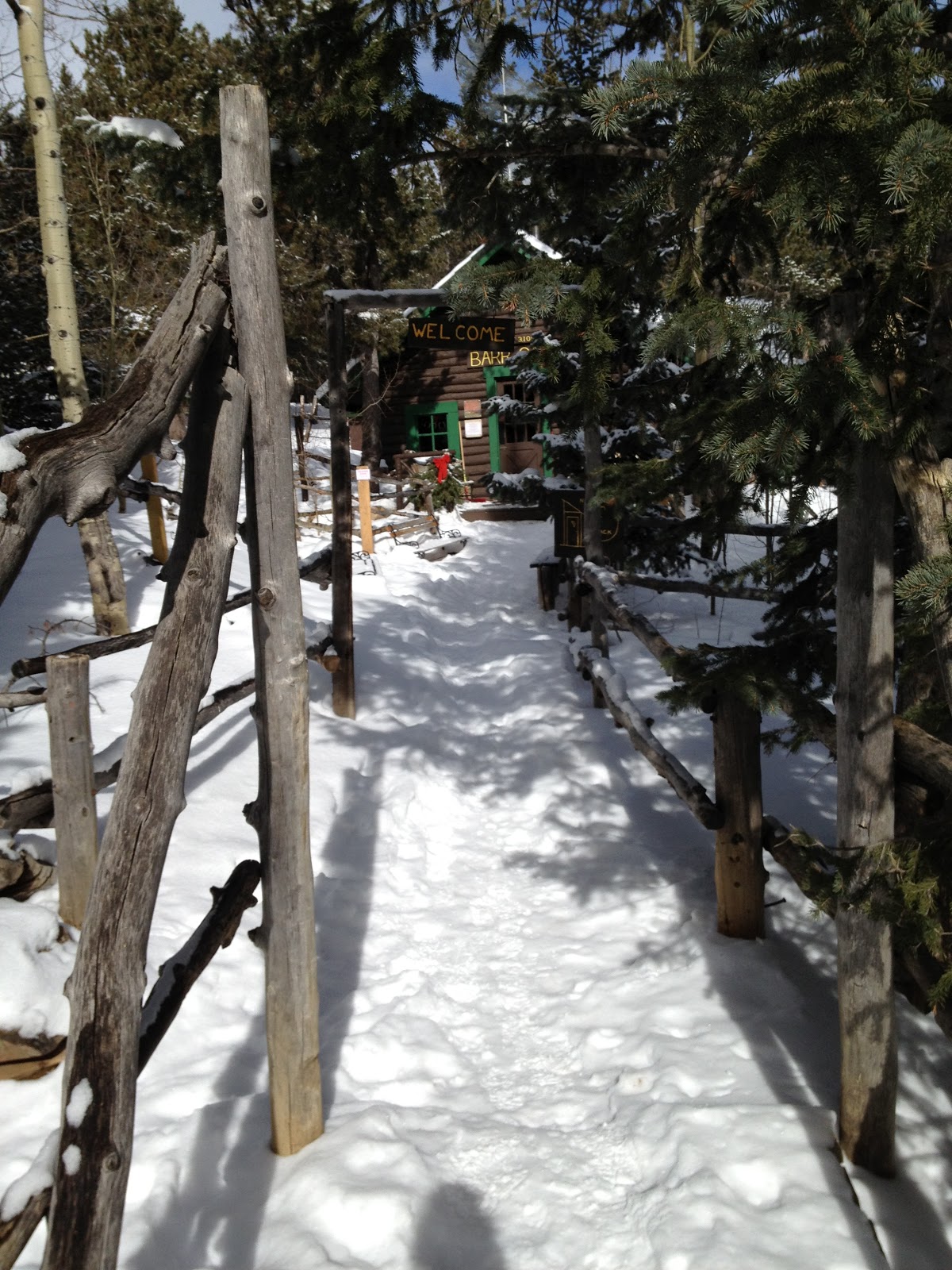 |
| The entrance to Barr Camp, which is at about 10,200 feet. Barr Camp is midway up Pikes Peak and is a frequent stopping point for runners and hikers going both ways. |
 |
| Looking down toward Manitou Springs on my descent. |
 |
| Pikes is right behind me. |
Saturday, February 4, 2012
Your Guide to Finishing the Leadville Trail 100-Mile Run (Part II: Mile 51-Finish)
Continued from Part I
Winfield (50) - Twin Lakes (60.5)
A lot of runners drop at Winfield either because they're out of gas or because they've missed the cut-off time. My biggest advice as you leave Winfield is to stay positive and not think too far ahead. If you fixate on the super-steep, crowded climb up the backside of Hope Pass, you're liable to get really discouraged and never get out of Winfield. Take it one step at a time. Enjoy the gradual descent on the trail connecting to the Hope Pass climb. Talk to your pacer. Be sure he/she understands your needs. Leadville allows muling, so give all or most of your stuff to your pacer. Sorry, but that's what he/she signed up for!
I'm not going to bullshit you: The climb up the backside of Hope Pass is an ass kicker. It is very steep especially in the "lower" section, and it's difficult to get into a groove because of the busy two-way traffic. Once you get above treeline, it seems like it's never going to end. I usually take a few breathers here, and I always tell my pacer not to worry about me. I may look like hell going up the backside of Hope, but I know from experience that once we're at the top and descending again I'll come back from the dead. Hope Pass is about refusing to give up.
Once at the top of the pass, give yourself a pat on the back. You just accomplished something pretty impressive. You may feel inches from death--that's likely because you're at 12,600 feet! Believe me when I say you'll feel better as get "lower." Now get going! The descent can be treacherous in sections, mostly because of the altitude's effects on your mind. Little things become big things. A small rock looks like a jagged boulder. A gentle descent may look like a cliff. Be patient and have confidence in yourself. Above all, stay upright! The view of Twin Lakes from the top of Hope Pass is spectacular. That's where you're going!
You'll come upon the Hopeless aid station at about mile 55.5. Again, get what you need, but don't take too much, and then get going! You have five more miles until Twin Lakes. It's usually here that I see a lot of carnage. I've seen outbound runners (as I'm going inbound) sprawled out on rocks, exhausted. I've seen runners in tears. I've seen runners who have given it their all, but who know they've missed or will miss the cut-off. Encourage them, but focus on yourself. You have to get down this mountain. Run as much as you can, but don't be hard on yourself if you need to walk a few sections to save your quads. Just get 'er done.
Ah, you're down the mountain and back on the meadow again, with those water crossings ahead. Relish the water. Take a quick soak in the river if you're hot. Give yourself some relief. The meadow trail is soft and flat. I can usually cruise here and my spirits are high because I know my crew is just ahead.
Before you know it, there's the Twin Lakes aid station. Here's something to think about: In the last 20 miles, you've climbed and descended a hefty ~12,000 feet. Multiply all of that by 5 and you get 60,000 feet of gain/loss over 100 miles. That's still less gain/loss than Hardrock! I say that for perspective's sake--it could be much worse (or better, depending on your perspective)!
But I digress.
Entering Twin Lakes, you're now a little over 60 miles into the race. A lot of runners have already DNF'd, and more will drop at Twin Lakes. But not you. At Twin Lakes, get what you need, refuel and get out of there without a thought. Let me say that again: get out of there without a thought. If the letters D-N-F enter your mind, simply turn off your brain and run! It's not supposed to be easy; yes, you're supposed to be hurting after 60 miles. The finish line in all her glory comes to those who are tough enough to withstand the pain.
Another note: If it's cloudy, keep that emergency poncho on you as you leave Twin Lakes. If it's late afternoon or early evening, take a headlamp as a precaution. Remember to get your pacer to mule for you (they'll need their headlamp, too). If you don't have a pacer, keep it light leaving Twin Lakes; you have a long, gradual climb in front of you.
Training tip for this section: Practice in the mountains by running up and back down the biggest peaks you can find. Also do some weight training to strengthen your leg muscles for the descents.
Twin Lakes (60.5) - Half Pipe (70.9)
Those who make it out of Twin Lakes now have a very good chance of finishing the Leadville 100. I love the climb out of Twin Lakes, maybe because the aid station is so hopping and I leave really pumped (for me, miles 60-80 are usually my best). The climb is gradual but long. You're on that same rocky road, and then trail, that you flew down on the outbound. If you keep it light and use your pacer as a mule, the climb isn't too bad.
Finally, when you reach the top of the climb, you can top off your bottles at the Mount Elbert water stop and then cruise into the Half Pipe aid station. At the 2011 race, this was without doubt my best section. I ran every step (except for when I had to make a pitstop) at a pretty good clip and made up lots of time lost on Hope Pass, where I'd struggled a bit. The trail is gentle and there are no bad climbs that slow you down. This is a section to run! Just crank it and Half Pipe will be there before you know it.
Training tip for this section: Practice your hills and be sure to run some flats, too. Leadville isn't all mountains!
Half Pipe (70.9) - Fish Hatchery (76.5)
If you didn't take a headlamp with you at Twin Lakes, take one now at Half Pipe (definitely stash one there). The road entering Fish Hatchery can be busy with cars and you want to be seen. But first, you need to get to Pipeline, where your crew is waiting for you. It's an easy couple miles to Pipeline--no real hills to speak of. I ran this section at about 7:50-8:30 pace during the 2011 race.
After Pipeline, it's all road into the Fish Hatchery. This is a mentally tough section for many, as it's dark and the stretches of road seem to go on forever. Jog if you can. If you can't jog, power-hike (I do both). Whatever you do, move forward. Think relentless forward progress.
Fish Hatchery inbound is where things can start to get interesting. You're now a little more than three-quarters done with the race. Your legs might be trashed and you might be feeling nauseous and woozy. If you're in a world of hell at the hatchery, welcome to Leadville! Most people feel like hell at the hatchery inbound. Focus on refueling and regrouping. Eat some soup and be sure to get your electrolytes back up. Take in some caffeine! Get a new headlamp and a back-up light, too. Consider adding a layer or two, as the temperature drops fast at night in the mountains. The last thing you want is to be out there in the Colorado high county exhausted and cold--a recipe for disaster.
Training tip for this section: There are no secrets to this section, except toughing out the miles. This is what you trained for.
Fish Hatchery (76.5) - Mayqueen (86.5)
I use the road out of the hatchery to regroup. At the 2011 race, I power-hiked this section while eating some potato soup my mom made for me. It's a good idea to get yourself mentally focused and physically dialed back in on the road out of the hatchery. Caffeine from here on out is critical. I didn't take in enough caffeine late in the 2011 race (in part because I had trouble keeping anything down) and it cost me at least an hour.
About a mile up the road, you'll come upon a marker telling you to turn left into the trail leading up to Powerline. This turn wasn't well-marked during the 2010 race and I missed it, adding 2 miles onto my race that ultimately cost be about 2 hours (I was mentally crushed from the extra 2 miles and also experienced some hypothermia and bonking at Mayqueen inbound). So whatever you do, be on the lookout for this turn!
OK, you're now on the Powerline trail. This "little" section may test your resolve. Remember how I said the key to Hope Pass is not giving up? Well, that's also the key to Powerline. It's a 1,500-foot climb of a few miles up to 11,100-foot Sugarloaf Pass, with many false summits. Few run Powerline inbound, instead power-hiking it. I'll be honest; Powerline has mentally gotten to me the two times I've done Leadville. This is where the race's motto really hits home with me: "You are better than you think you are, and you can do more than you think you can." Climbing Powerline, you have to really believe in those words--and in yourself.
Once atop Sugarloaf Pass, you're at about 82 miles and a little more than 4 miles to Mayqueen. For the most part, it's all downhill from here! The road here is rocky and, this late in the race, pretty technical. Eventually, you'll dump out on the rolling Hagerman Pass Road. Once on Hagerman, go a mile or so and then start looking for a left turn into the Colorado Trail. The trail will bring you down to Mayqueen. Again, you do not want to miss this turn. It was well-marked at the 2011 race.
Ah, the neverending Colorado Trail section connecting Hagerman Pass to Mayqueen. I love this section of trail on the outbound, but totally hate it on the inbound. This late at night, and in my exhausted state, the trail seems super technical, slowing me down a lot. What feels like a 10-mile trek is really more like 3 miles on the trail. By now your world is so small that everything, such as that little rock in front of you, might seem overwhelming. Relentless forward progress....
Once you leave the Colorado trail via a bridge and are on a road, you're only a few steps from the Mayqueen aid station. Depending on how fast you've gone, it could be dusk, the middle of the night, or dawn. Whatever the case, it's probably cold. You want to layer up at Mayqueen, even if you're comfortable going in. It's cold enough along Turquoise Lake that you can go hypothermic, which will end your race. Bundle up from here to the finish.
A word on puking: I'd never puked in a race until the Leadville 100 in 2010. I came into Mayqueen in bad shape and started puking after eating some burned soup. Then I started shaking uncontrollably. After an hour or so in a cot, bundled up in a sleeping bag with the medical volunteers attending to me, I finally got some food down. I was sure this was the end of the road for me, but somehow I came back from the dead and left Mayqueen determined to finish. I say all of that because it seems like Leadville has a way of making almost everyone puke. It's probably the altitude. Yeah, I puked at the 2011 race, too--but it was one of those pukes where I ralphed while running and never stopped, amusing my pacer, Lance. Here's a great clip of Andy Jones-Wilkins puking at the 2009 race after leaving the Fish Hatchery:
Training tip for this section: All those hills and mountain runs/hikes will pay off on the Powerline climb. As part of your training, be sure to work on your uphill hiking. Hiking is a hugely overlooked, neglected facet of training for a 100-mile mountain race.
Mayqueen (86.5) - Finish
Leaving Mayqueen, quickly take stock of where you are in this epic race. You have 13.5 miles until the finish, much of it flat but technical. It's probably going to be cold (and keep getting colder), so hopefully you've bundled up. Your pacer should be carrying everything you need. Did you get enough caffeine back at Mayqueen? You're going to need the extra jolt.
At this point, 13.5 miles might seem like an eternity to you. Hundreds have a way of totally messing with your mind late in the game. Rather than look at it as 13.5 miles, or a little over half-marathon distance, just put one foot in front of the other. If you can run, go for it. If you can't run, try to jog. If you can't jog, hike. What you have to do between here and the finish isn't rocket science--just put one foot in front of the other.
At about mile 93 you'll come to the Tabor Boat Ramp. It's probably a good thing that your crew is here waiting for you. Are you properly dressed? Do you need more caffeine? Take care of any issues at Tabor Boat Ramp since this is the last stop before the finish, but don't take a long time. If you stop here, it should be for no more than a minute. If you're racing against the clock, maybe don't stop at all.
(Note on Tabor Boat Ramp: It can be challenging to find in the wee hours of the night. My advice is to mark it with your crew vehicle's GPS unit during a daytime visit. For that matter, mark ALL of the aid stations with your GPS unit the day before the race. If you don't have a GPS unit and it's not doable budget-wise [you can get a decent one for under $150], see if you can borrow one from a friend.)
The last 7 miles is a game of persistence and watching for course markers. The markers can sometimes be a little sparse toward the end, so keep your eyes open. The lake may seem like it goes on forever, but it'll end soon enough and you'll find yourself walking up a fairly hefty hill and making a few turns here and there as you make your way to the Boulevard. The Boulevard leads you into town, where you'll finish this sucker. There's a street light at the end of the Boulevard that's hard not to notice--that's where you turn before making a right onto 6th Street. The good news about the Boulevard is that it's very runnable. Run here if you can. If you can't, power hike it.
This is a special moment--one you'll never forget. Take it all in, because days like this don't happen often.
Takeaways:
Winfield (50) - Twin Lakes (60.5)
A lot of runners drop at Winfield either because they're out of gas or because they've missed the cut-off time. My biggest advice as you leave Winfield is to stay positive and not think too far ahead. If you fixate on the super-steep, crowded climb up the backside of Hope Pass, you're liable to get really discouraged and never get out of Winfield. Take it one step at a time. Enjoy the gradual descent on the trail connecting to the Hope Pass climb. Talk to your pacer. Be sure he/she understands your needs. Leadville allows muling, so give all or most of your stuff to your pacer. Sorry, but that's what he/she signed up for!
 |
| Buckles from 2010, 2011, 2013 and 2014. |
You'll come upon the Hopeless aid station at about mile 55.5. Again, get what you need, but don't take too much, and then get going! You have five more miles until Twin Lakes. It's usually here that I see a lot of carnage. I've seen outbound runners (as I'm going inbound) sprawled out on rocks, exhausted. I've seen runners in tears. I've seen runners who have given it their all, but who know they've missed or will miss the cut-off. Encourage them, but focus on yourself. You have to get down this mountain. Run as much as you can, but don't be hard on yourself if you need to walk a few sections to save your quads. Just get 'er done.
 |
| Coming into Twin Lakes inbound with Mark T., 2014 |
Before you know it, there's the Twin Lakes aid station. Here's something to think about: In the last 20 miles, you've climbed and descended a hefty ~12,000 feet. Multiply all of that by 5 and you get 60,000 feet of gain/loss over 100 miles. That's still less gain/loss than Hardrock! I say that for perspective's sake--it could be much worse (or better, depending on your perspective)!
But I digress.
Entering Twin Lakes, you're now a little over 60 miles into the race. A lot of runners have already DNF'd, and more will drop at Twin Lakes. But not you. At Twin Lakes, get what you need, refuel and get out of there without a thought. Let me say that again: get out of there without a thought. If the letters D-N-F enter your mind, simply turn off your brain and run! It's not supposed to be easy; yes, you're supposed to be hurting after 60 miles. The finish line in all her glory comes to those who are tough enough to withstand the pain.
Another note: If it's cloudy, keep that emergency poncho on you as you leave Twin Lakes. If it's late afternoon or early evening, take a headlamp as a precaution. Remember to get your pacer to mule for you (they'll need their headlamp, too). If you don't have a pacer, keep it light leaving Twin Lakes; you have a long, gradual climb in front of you.
Training tip for this section: Practice in the mountains by running up and back down the biggest peaks you can find. Also do some weight training to strengthen your leg muscles for the descents.
Twin Lakes (60.5) - Half Pipe (70.9)
Those who make it out of Twin Lakes now have a very good chance of finishing the Leadville 100. I love the climb out of Twin Lakes, maybe because the aid station is so hopping and I leave really pumped (for me, miles 60-80 are usually my best). The climb is gradual but long. You're on that same rocky road, and then trail, that you flew down on the outbound. If you keep it light and use your pacer as a mule, the climb isn't too bad.
Finally, when you reach the top of the climb, you can top off your bottles at the Mount Elbert water stop and then cruise into the Half Pipe aid station. At the 2011 race, this was without doubt my best section. I ran every step (except for when I had to make a pitstop) at a pretty good clip and made up lots of time lost on Hope Pass, where I'd struggled a bit. The trail is gentle and there are no bad climbs that slow you down. This is a section to run! Just crank it and Half Pipe will be there before you know it.
Training tip for this section: Practice your hills and be sure to run some flats, too. Leadville isn't all mountains!
Half Pipe (70.9) - Fish Hatchery (76.5)
If you didn't take a headlamp with you at Twin Lakes, take one now at Half Pipe (definitely stash one there). The road entering Fish Hatchery can be busy with cars and you want to be seen. But first, you need to get to Pipeline, where your crew is waiting for you. It's an easy couple miles to Pipeline--no real hills to speak of. I ran this section at about 7:50-8:30 pace during the 2011 race.
After Pipeline, it's all road into the Fish Hatchery. This is a mentally tough section for many, as it's dark and the stretches of road seem to go on forever. Jog if you can. If you can't jog, power-hike (I do both). Whatever you do, move forward. Think relentless forward progress.
Fish Hatchery inbound is where things can start to get interesting. You're now a little more than three-quarters done with the race. Your legs might be trashed and you might be feeling nauseous and woozy. If you're in a world of hell at the hatchery, welcome to Leadville! Most people feel like hell at the hatchery inbound. Focus on refueling and regrouping. Eat some soup and be sure to get your electrolytes back up. Take in some caffeine! Get a new headlamp and a back-up light, too. Consider adding a layer or two, as the temperature drops fast at night in the mountains. The last thing you want is to be out there in the Colorado high county exhausted and cold--a recipe for disaster.
Training tip for this section: There are no secrets to this section, except toughing out the miles. This is what you trained for.
Fish Hatchery (76.5) - Mayqueen (86.5)
I use the road out of the hatchery to regroup. At the 2011 race, I power-hiked this section while eating some potato soup my mom made for me. It's a good idea to get yourself mentally focused and physically dialed back in on the road out of the hatchery. Caffeine from here on out is critical. I didn't take in enough caffeine late in the 2011 race (in part because I had trouble keeping anything down) and it cost me at least an hour.
About a mile up the road, you'll come upon a marker telling you to turn left into the trail leading up to Powerline. This turn wasn't well-marked during the 2010 race and I missed it, adding 2 miles onto my race that ultimately cost be about 2 hours (I was mentally crushed from the extra 2 miles and also experienced some hypothermia and bonking at Mayqueen inbound). So whatever you do, be on the lookout for this turn!
OK, you're now on the Powerline trail. This "little" section may test your resolve. Remember how I said the key to Hope Pass is not giving up? Well, that's also the key to Powerline. It's a 1,500-foot climb of a few miles up to 11,100-foot Sugarloaf Pass, with many false summits. Few run Powerline inbound, instead power-hiking it. I'll be honest; Powerline has mentally gotten to me the two times I've done Leadville. This is where the race's motto really hits home with me: "You are better than you think you are, and you can do more than you think you can." Climbing Powerline, you have to really believe in those words--and in yourself.
Once atop Sugarloaf Pass, you're at about 82 miles and a little more than 4 miles to Mayqueen. For the most part, it's all downhill from here! The road here is rocky and, this late in the race, pretty technical. Eventually, you'll dump out on the rolling Hagerman Pass Road. Once on Hagerman, go a mile or so and then start looking for a left turn into the Colorado Trail. The trail will bring you down to Mayqueen. Again, you do not want to miss this turn. It was well-marked at the 2011 race.
Ah, the neverending Colorado Trail section connecting Hagerman Pass to Mayqueen. I love this section of trail on the outbound, but totally hate it on the inbound. This late at night, and in my exhausted state, the trail seems super technical, slowing me down a lot. What feels like a 10-mile trek is really more like 3 miles on the trail. By now your world is so small that everything, such as that little rock in front of you, might seem overwhelming. Relentless forward progress....
Once you leave the Colorado trail via a bridge and are on a road, you're only a few steps from the Mayqueen aid station. Depending on how fast you've gone, it could be dusk, the middle of the night, or dawn. Whatever the case, it's probably cold. You want to layer up at Mayqueen, even if you're comfortable going in. It's cold enough along Turquoise Lake that you can go hypothermic, which will end your race. Bundle up from here to the finish.
A word on puking: I'd never puked in a race until the Leadville 100 in 2010. I came into Mayqueen in bad shape and started puking after eating some burned soup. Then I started shaking uncontrollably. After an hour or so in a cot, bundled up in a sleeping bag with the medical volunteers attending to me, I finally got some food down. I was sure this was the end of the road for me, but somehow I came back from the dead and left Mayqueen determined to finish. I say all of that because it seems like Leadville has a way of making almost everyone puke. It's probably the altitude. Yeah, I puked at the 2011 race, too--but it was one of those pukes where I ralphed while running and never stopped, amusing my pacer, Lance. Here's a great clip of Andy Jones-Wilkins puking at the 2009 race after leaving the Fish Hatchery:
Training tip for this section: All those hills and mountain runs/hikes will pay off on the Powerline climb. As part of your training, be sure to work on your uphill hiking. Hiking is a hugely overlooked, neglected facet of training for a 100-mile mountain race.
Mayqueen (86.5) - Finish
Leaving Mayqueen, quickly take stock of where you are in this epic race. You have 13.5 miles until the finish, much of it flat but technical. It's probably going to be cold (and keep getting colder), so hopefully you've bundled up. Your pacer should be carrying everything you need. Did you get enough caffeine back at Mayqueen? You're going to need the extra jolt.
At this point, 13.5 miles might seem like an eternity to you. Hundreds have a way of totally messing with your mind late in the game. Rather than look at it as 13.5 miles, or a little over half-marathon distance, just put one foot in front of the other. If you can run, go for it. If you can't run, try to jog. If you can't jog, hike. What you have to do between here and the finish isn't rocket science--just put one foot in front of the other.
At about mile 93 you'll come to the Tabor Boat Ramp. It's probably a good thing that your crew is here waiting for you. Are you properly dressed? Do you need more caffeine? Take care of any issues at Tabor Boat Ramp since this is the last stop before the finish, but don't take a long time. If you stop here, it should be for no more than a minute. If you're racing against the clock, maybe don't stop at all.
(Note on Tabor Boat Ramp: It can be challenging to find in the wee hours of the night. My advice is to mark it with your crew vehicle's GPS unit during a daytime visit. For that matter, mark ALL of the aid stations with your GPS unit the day before the race. If you don't have a GPS unit and it's not doable budget-wise [you can get a decent one for under $150], see if you can borrow one from a friend.)
The last 7 miles is a game of persistence and watching for course markers. The markers can sometimes be a little sparse toward the end, so keep your eyes open. The lake may seem like it goes on forever, but it'll end soon enough and you'll find yourself walking up a fairly hefty hill and making a few turns here and there as you make your way to the Boulevard. The Boulevard leads you into town, where you'll finish this sucker. There's a street light at the end of the Boulevard that's hard not to notice--that's where you turn before making a right onto 6th Street. The good news about the Boulevard is that it's very runnable. Run here if you can. If you can't, power hike it.
 |
| LT100, 2011. Coming in with a 22:35. |
Once you make the left turn after the Boulevard, you are home free. The finish line is literally just around the corner and up 6th Street. When you make that turn onto 6th Street, you will see the finish. Go for it! Run your heart out. Those cheers are for you, and this is your moment. You're mere minutes from finishing the Leadville Trail 100-Mile Run!
When you cross the line via the red carpet, Merilee, who directed the race for years with founder Ken Chlouber, will be there to give you a hug and your medal. If you need assistance, the medical tent is right there at the finish. It's heated and it also has lots of food and fluids.
This is a special moment--one you'll never forget. Take it all in, because days like this don't happen often.
Takeaways:
- The Leadville Trail 100 is a hard race. It's not the total gain/loss (32,000 feet) that makes it hard. It's not the course itself that's super hard, either, though certainly the course is challenging in sections (e.g., Hope Pass and Powerline inbound). What makes the LT100 hard, beyond the distance involved and varying conditions, is the altitude. You're running 100 miles between 9,200 feet and 12,600 feet. That's tough.
- The inbound is much harder than the outbound. While it's possible to negative-split the LT100, few runners have actually done that. The fact of the matter is that the inbound/return trip is a hell of a lot harder than the outbound, in part because your legs are fatigued by then but mostly because the climbs involved are challenging (Hope Pass inbound and Powerline inbound being chief among them). What this means is that you need to run with patience on the outbound so you have gas in the tank for the return trip. There is very little margin for error.
- Hope Pass is where dreams can die. I can run 80 of the 100 miles at the LT100 at sub-20 and maybe sub-19-hour pace. Where I've missed my sub-20 goal is on Hope Pass. Until I figure out how to cover the Hope Pass double-crossing in 5:30 or at least sub-6 hours, sub-20 at Leadville is never going to happen.
Subscribe to:
Posts (Atom)